
Q & A
FrequentlyAsked Questions
Everything you need to know about the program structure, expectations, and admissions.
The Program
Life sciences: cell biology, genetics, cancer biology, neuroscience, bioinformatics, AI in medicine, disease biology, and related biomedical domains. At this point in time our focus is in the above areas. However, we are growing and as mentors from other STEM domains join, we will offer in other fields also.
Yes, all our projects are interdisciplinary in nature.
Students aged 13 to 25 with a genuine interest in biology, medicine, and life sciences who are ready to work consistently and engage with feedback. High school students use the program to discover research direction, build essential skills, and strengthen their academic narrative. Early university students engage with more advanced projects that reflect real-world research demands and career preparation.
A 12-week program where students refine a research question, build and document methodology, complete revision cycles, and present at a virtual symposium. Students leave with a portfolio-ready project they fully own, can explain with confidence, and can defend in front of experts. The shift from “I did this project” to “I understand exactly why I made every decision in this project” is what the Beginner Program builds.
Available to students who demonstrate readiness after the Beginner Program. Two pathways: Academic Track (manuscript development) and Innovator Track (applied biological systems). Requires mentor approval.
No. The program reflects how real research works. Mentors provide ongoing feedback throughout, and students present their projects at the uMaster virtual symposium at the end of the program. The work itself is the assessment.
Mentors and Sessions
Once you submit your resume and Statement of Purpose indicating your topic of interest, we share the program details and your assigned mentor's profile. If you would like to proceed, we schedule a virtual meeting where you will give a brief presentation and have the opportunity to ask questions. Parents are welcome to attend. If both student and mentor are aligned, the program begins.
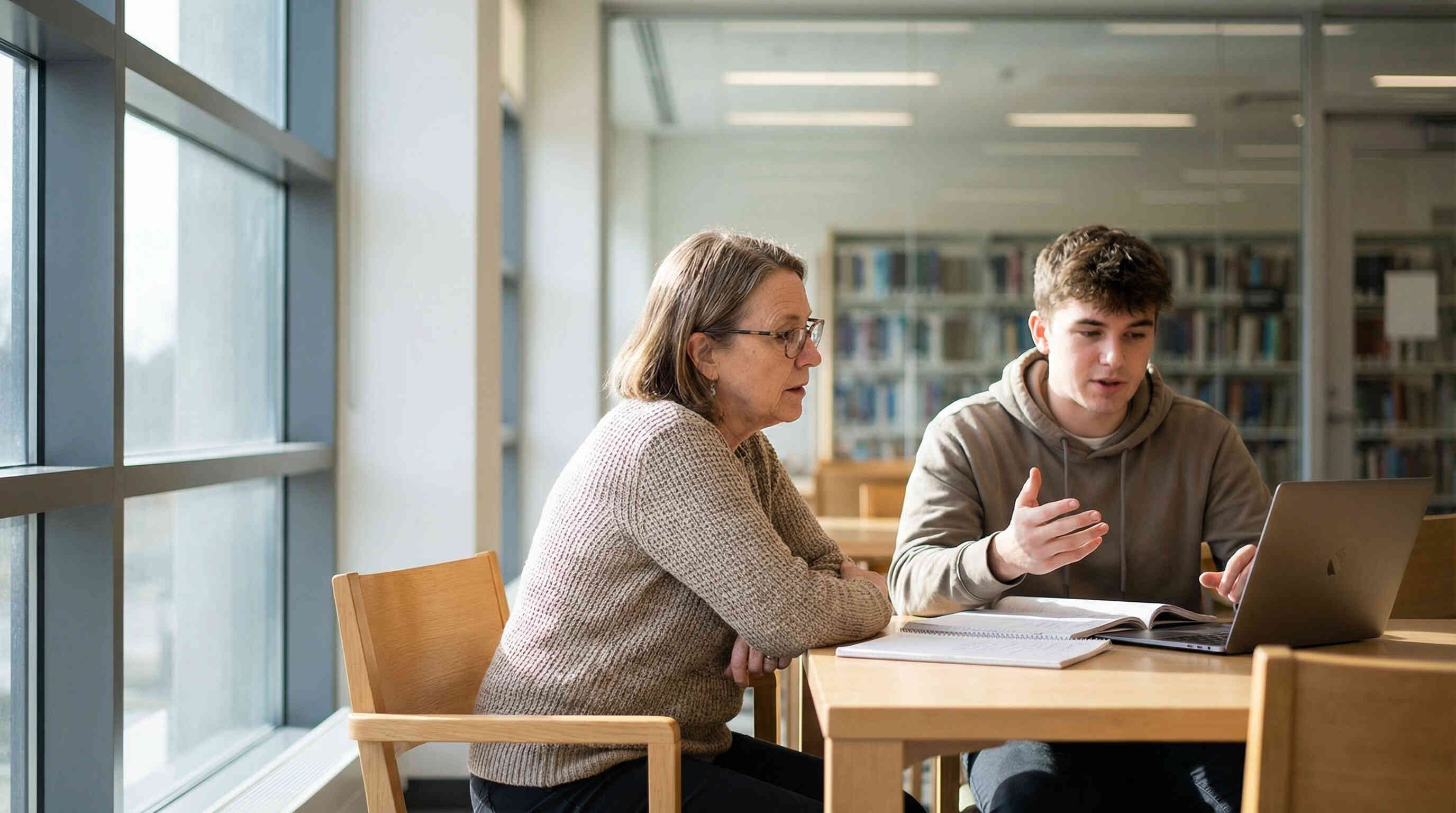
Each week includes one live, one-on-one session with your mentor via video call, scheduled at a mutually agreed time. Outside of that session, students dedicate 5 to 7 hours to independent reading, drafting, and revision. The program is personalised, so the content for each week is shaped by where you are in your research.
All sessions are live. This is a personalized, one-on-one mentoring program. There are no pre-recorded modules.
Let your mentor or the uMaster team know as early as possible. Make-up sessions can be arranged based on mentor availability. If two or more consecutive sessions are missed without prior notice, only two make-up sessions are available per 12-week program. Mentors are active professionals with other commitments, so consistent scheduling matters.
Session recordings are possible with the mentor's prior consent. All study materials shared during the program are yours to keep.
Once the program begins, mentor changes are not available. Each mentor runs a distinct program, and continuity is essential to the work. To avoid this, we recommend meeting two or three mentors before committing. If any issue arises during the program, contact the uMaster team and we will address it directly.
We ask that students and mentors begin a new project together to maintain integrity and direction. If a student has already completed work elsewhere, they may register for publication training instead.
Outcomes
That depends on the work and the competition. We prepare students for strong presentation and clear reasoning. Students who are prepared present confidently. The results follow from the quality of the work.
We focus on building strong, defensible work and a clear academic narrative. Students come out of this program with something real to speak to in applications and interviews. The outcome depends on the student, the school, and many factors outside the program. What they gain from us is real.
We guide students toward submission readiness when appropriate. Publication depends on journal decisions and revision timelines. We do not guarantee publication, but we produce work that is worth submitting. Students who want to pursue publication should signal this by week four or five so the mentor can shape the project accordingly.
Student ownership means:
- The student understands the research question
- The student understands the method
- The student can explain limitations
- The student can defend reasoning
Mentors guide. Students build. The confidence shift is real, what they own is real, and the understanding is theirs.
Yes. Students who successfully complete the program receive a certificate of completion. The cost is included in the program fee.
Yes. A letter of recommendation is provided in alignment with the needs of the university and the student's performance.
Time and Logistics
Students typically commit 5 to 7 hours per week:
- 1 hour live mentor session
- 3 to 5 hours reading, drafting, analysis, and revision
- Asynchronous feedback between sessions
Yes. Many students participate during academic terms. Summer offers a deeper runway, but structured work can continue during the school year with effective scheduling.
Yes. All mentorship, review, and symposium sessions are virtual. Students across time zones are accommodated.
A laptop or desktop with a reliable internet connection. Familiarity with Google Drive and Microsoft Office or equivalent tools is helpful. Some projects may require basic statistical software, which will be introduced in context when needed.
Application and Admissions
That is completely fine. Many students begin with curiosity and limited prior exposure. Willingness to revise and think critically matters more than prior experience. Mentors share preparatory material before the program begins to help students get oriented.
Coding is not required. When computational tools are used, they are introduced in context, at the right moment in the research process.
Submit your resume and a brief Statement of Purpose indicating the research area you are interested in. We will share mentor details, schedule a meeting, and confirm fit before the program begins. No recommendation letters are required at the application stage. The process takes approximately 15 minutes.
Cohorts are intentionally limited to 25 students. We prioritise mentorship quality over scale.
Fees and Policies
Yes. Payment can be made in full or in installments. Contact us for available options.
A full refund is available if requested at least one week before the program start date, provided you have not accessed any materials or attended any session. See our full Refund Policy for details.
We consider the student's context on a case-by-case basis. Reach out to discuss what works.
Contact us directly and we will help you figure out fit.